Maggie Special Labs is a lab for the practical application of AI in the home, and for learning from how homes actually work. We turn a deployed, consented, allocentric system into the real-world signal robot learning teams cannot get from simulation.
The distance between benchmark performance and real household performance is the single largest barrier to useful home robotics. It is also where the training data does not yet exist.
Task success rate for robotic manipulation systems in simulation. Tidy, repeatable, fully observed conditions.
Task success rate on real-world household tasks. Robots fail nearly nine in ten of them. This is the sim-to-real gap.
Source: Stanford HAI, 2026 AI Index Report.
Simulation rewards clean geometry, known objects, and conditions that never change. Real kitchens do not cooperate: clutter, glare, unfamiliar dishware, wet surfaces, and a thousand small variations that never appear in a synthetic scene. Models trained on staged data collapse the moment they meet a home they have not seen. The missing ingredient is not more compute. It is real-home interaction data, and labeled examples of the exact edge cases where models break.
We operate a working system in real homes across two contrasting markets, and the humans who keep it reliable produce labeled data as a byproduct of doing their job well.
Interaction data from a deployed allocentric system running in lived-in kitchens across Detroit and Accra. Not staged lab footage. Collected with consent and delivered structured for training.
Trained Domestic Technologists resolve the cases the system cannot handle on its own. Every intervention becomes a labeled example of exactly where a model failed and what the correct action was.
A deployed, non-humanoid platform already executing narrow, high-value manipulation tasks in real homes. This is a running deployment generating data now, not a research promise.
Parallel deployment in Detroit and Accra gives your models exposure to genuinely different kitchens, dishware, layouts, and habits. Diversity that makes trained systems more robust everywhere.
Consented capture inside occupied kitchens, from the deployed system and the Domestic Technologists who keep it reliable. A label tells a model what. A sequence teaches it why.
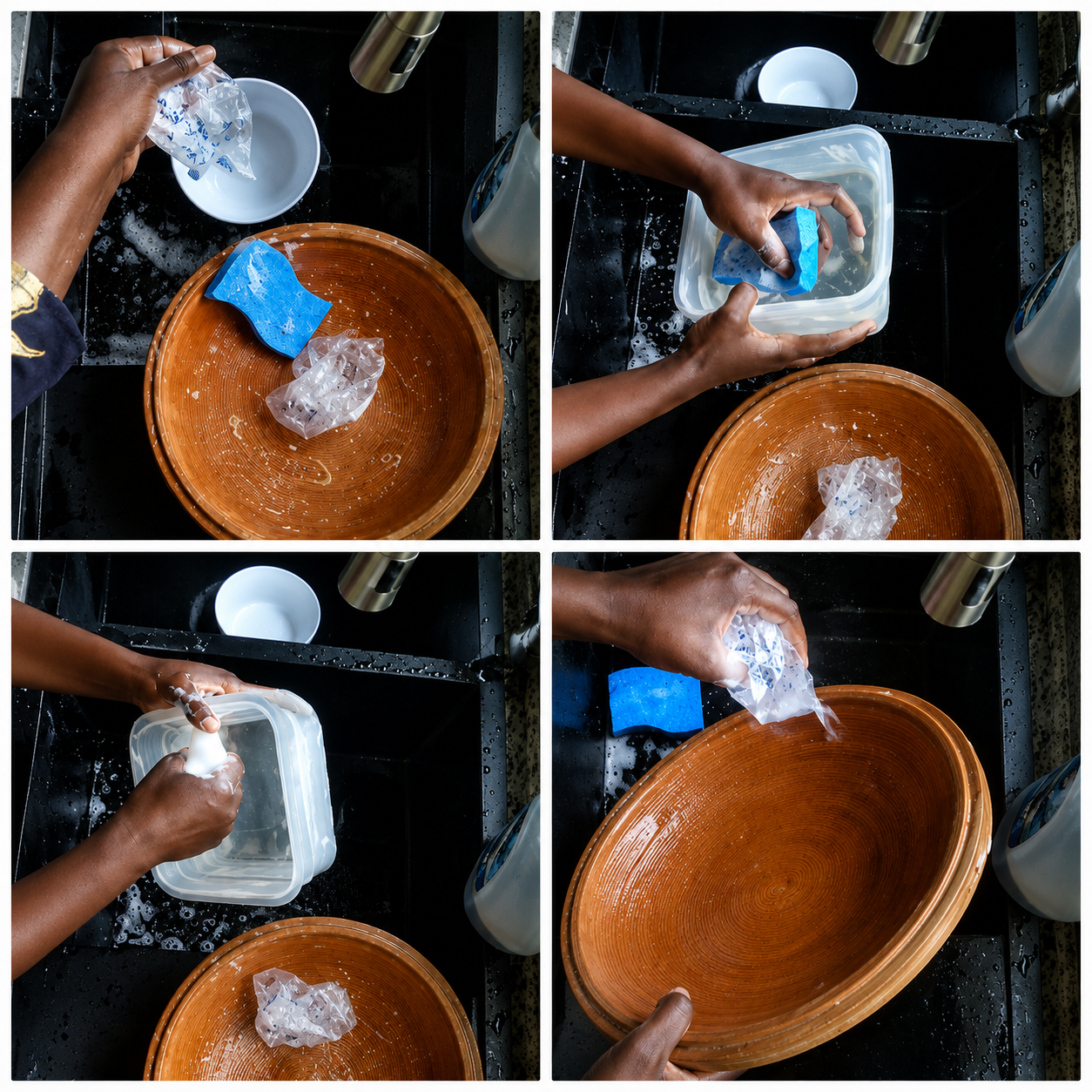
Wash, rinse, scrub, final pass. The temporal grammar of a task, captured in a real home.
Real materials, real light. Not rendered.
Clay basin, plastic vessel, porcelain plate. Different materials, different grips, different physics.
Wash, rinse, stack, dry. The order in which a domestic task is actually completed.
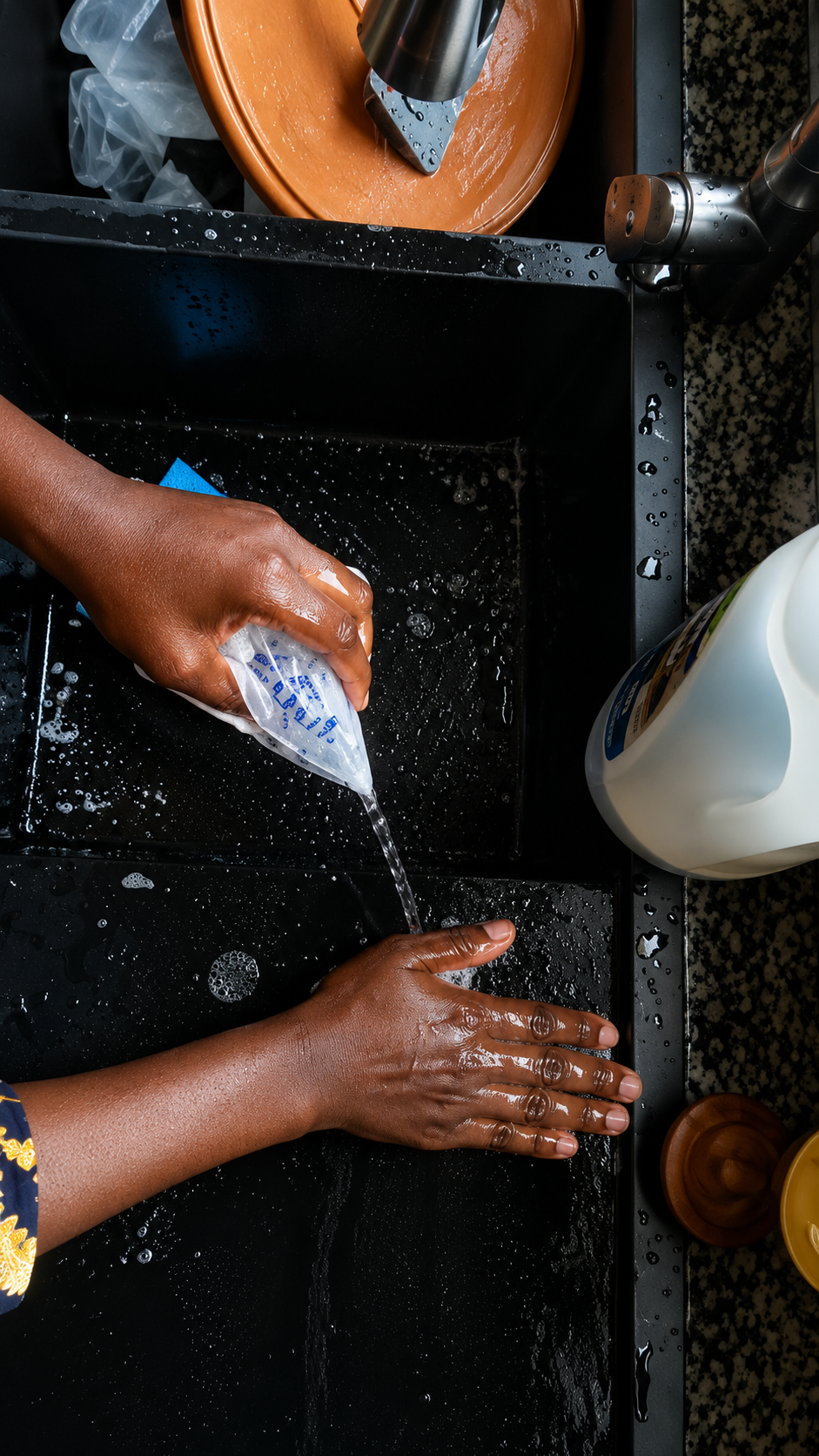
Soap suds, water displacement, surface reflection under real light. Real, not rendered.
Universal tasks performed with non-Western tools and techniques. The long tail of how the world lives.
Every data point we deliver is collected with the consent of the households we serve. We do not harvest homes. People know what the system sees, and they agree to it.
The workforce that produces our labeled data shares in the benefit of it. The Domestic Technologists who resolve edge cases are trained, credentialed, and paid toward a living wage, not treated as invisible annotation labor.
As a Public Benefit Corporation, this is not a marketing posture. It is written into how we are governed. Serious partners tell us this is a reason to work with us, not a constraint. Data with a clean provenance is data you can build on.
We shape each engagement to what you are building. Specifics, including terms, are discussed directly.
Structured, consented real-home interaction data from our deployed system, delivered for your training pipeline.
Targeted, human-labeled examples of the specific failure modes your models struggle with, produced by our Domestic Technologists.
Deeper collaboration: shape data collection around your research questions, or run a pilot against our live deployment.
Tell us what you are building. Rose responds to every serious inquiry directly.
Your inquiry is in. We will follow up directly, and can move under NDA to share a deployment overview, data samples, our workforce model, and the roadmap.